Waste plastics
Assess suitable plastic streams and contamination levels before selecting a thermal recovery route.
01 / PYROLYSIS
Explore thermal recovery systems for suitable waste plastics, tyres, and oil sludge. One process, configured around your feedstock and project goals.
Discuss your projectA CLOSER LOOK
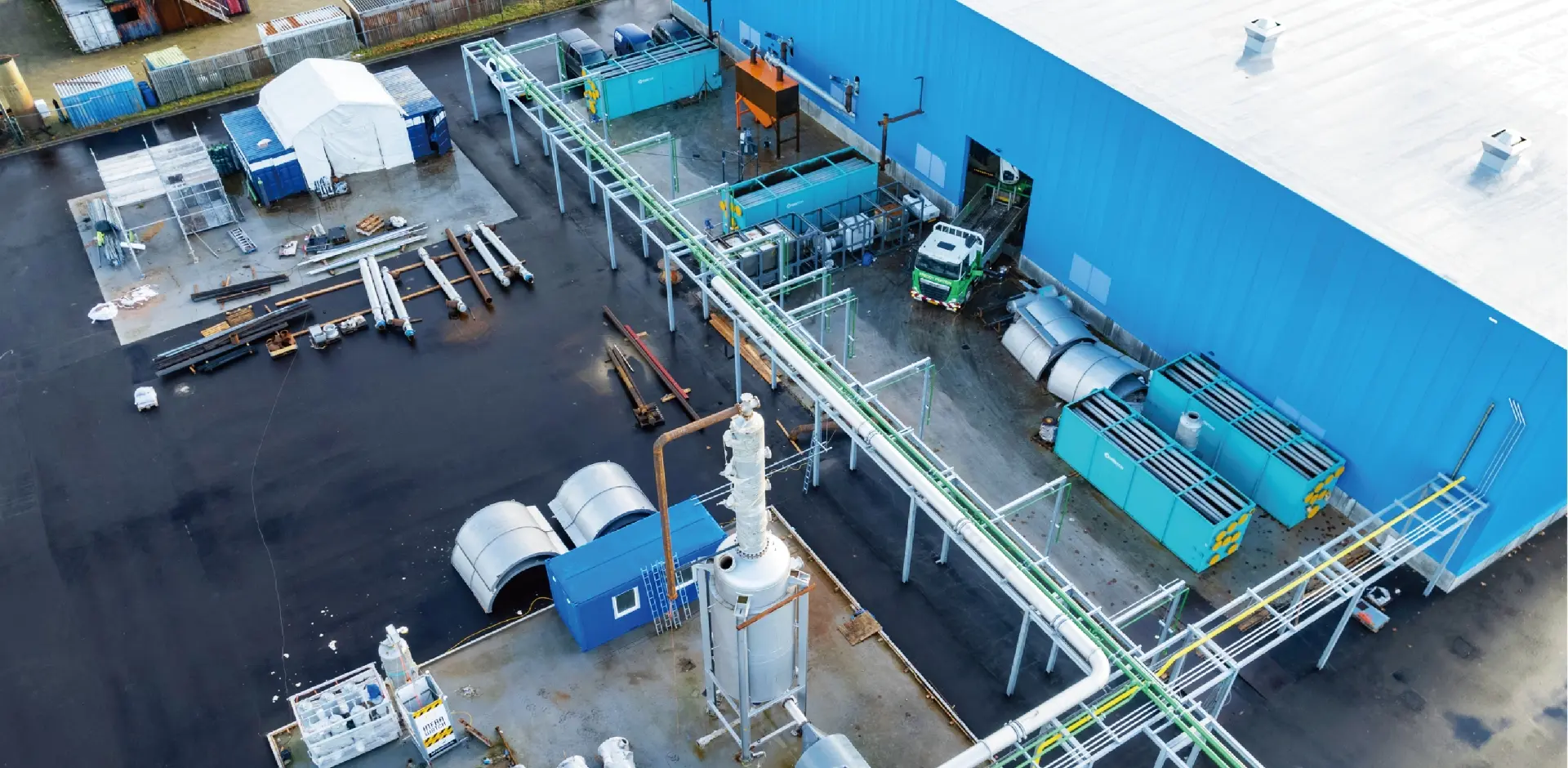
Take a short walk through a continuous pyrolysis installation and see how the equipment fits together on the factory floor.
THE STARTING POINT
Assess suitable plastic streams and contamination levels before selecting a thermal recovery route.
Plan preparation and handling around tyre-derived material, liquid products, solid residues, and steel recovery.
Review water, oil, and solids composition to evaluate the appropriate thermal treatment configuration.
INSIDE THE SYSTEM
Review samples, feedstock composition, and intended products.
Configure feed sizing, drying, and material handling as required.
Apply controlled heat within the selected reactor system.
Condense vapours and manage gas, solids, and product storage.
FOLLOW THE PROCESS
Explore a continuous tyre pyrolysis system through an animated process walkthrough, from the reactor to condensation and recovery. This silent animation illustrates the process; the final plant layout depends on your project.
PYROLYSIS
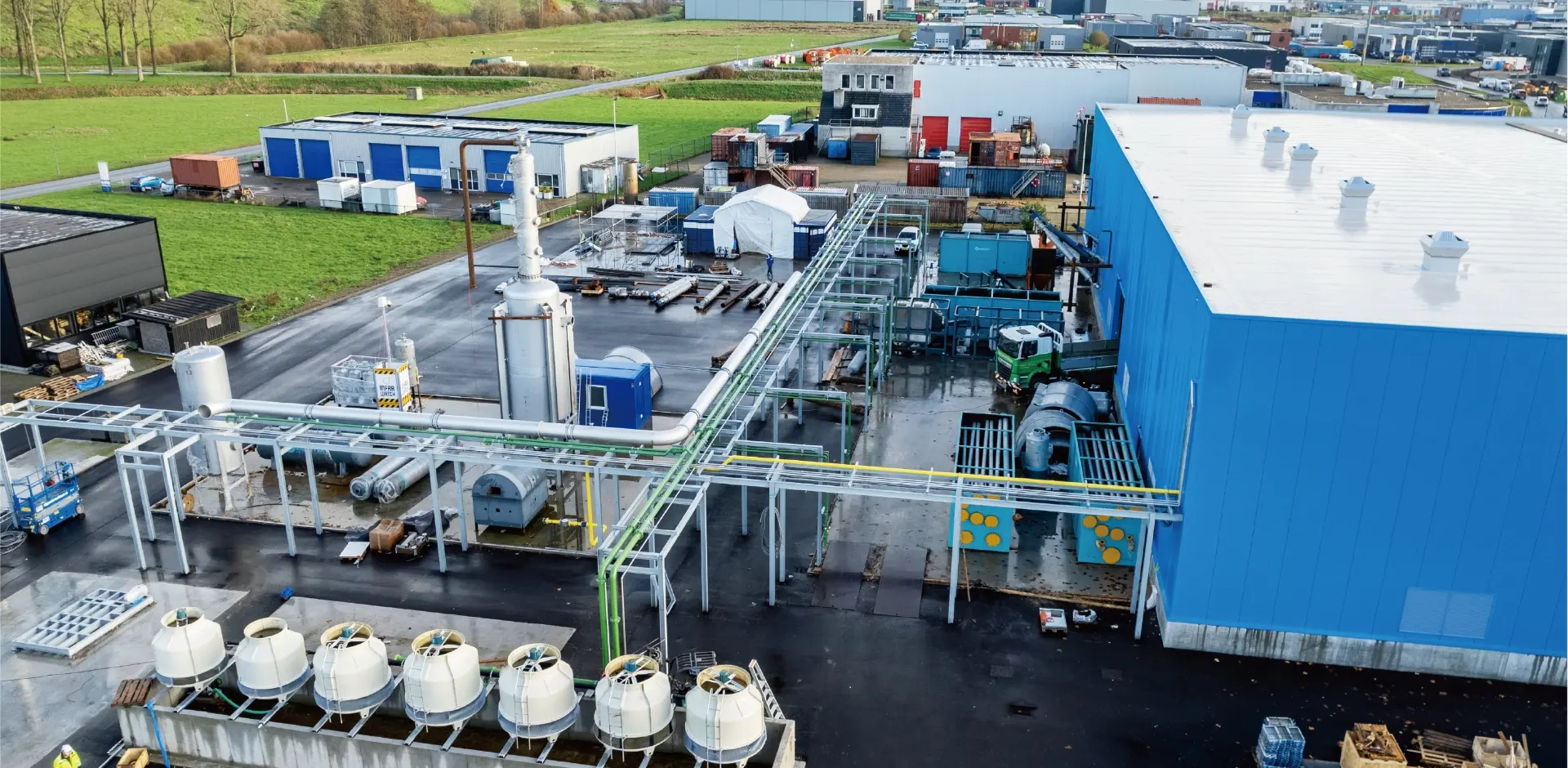
Pyrolysis uses heat in an oxygen-limited environment to break down suitable materials. Vapours are cooled into liquid products, while gas and solid fractions are managed as part of the process. Feedstock testing determines the appropriate equipment and expected products.
A practical plant brings together feed preparation, the reactor, condensation, gas handling, and residue management. Liliang Machinery starts with your material composition, planned throughput, available utilities, and site requirements.
Moisture, contamination, and material variability influence system design. Discuss emissions treatment, operating procedures, product handling, and local requirements at the planning stage. Capacity and product quality should be established through a project-specific assessment.
A FEW USEFUL ANSWERS
Suitability depends on composition, moisture, contaminants, and the selected process. Share a sample analysis and describe your waste stream so we can discuss the next assessment step.
Start with your available feedstock, operating hours, site space, and intended market. The final configuration follows a detailed technical assessment.
Yields and product characteristics vary with the input material and operating conditions. A reliable proposal should be based on representative material testing.
LET’S TALK ABOUT YOUR NEXT PROJECT
Bring us your challenge. Let’s explore what comes next.